

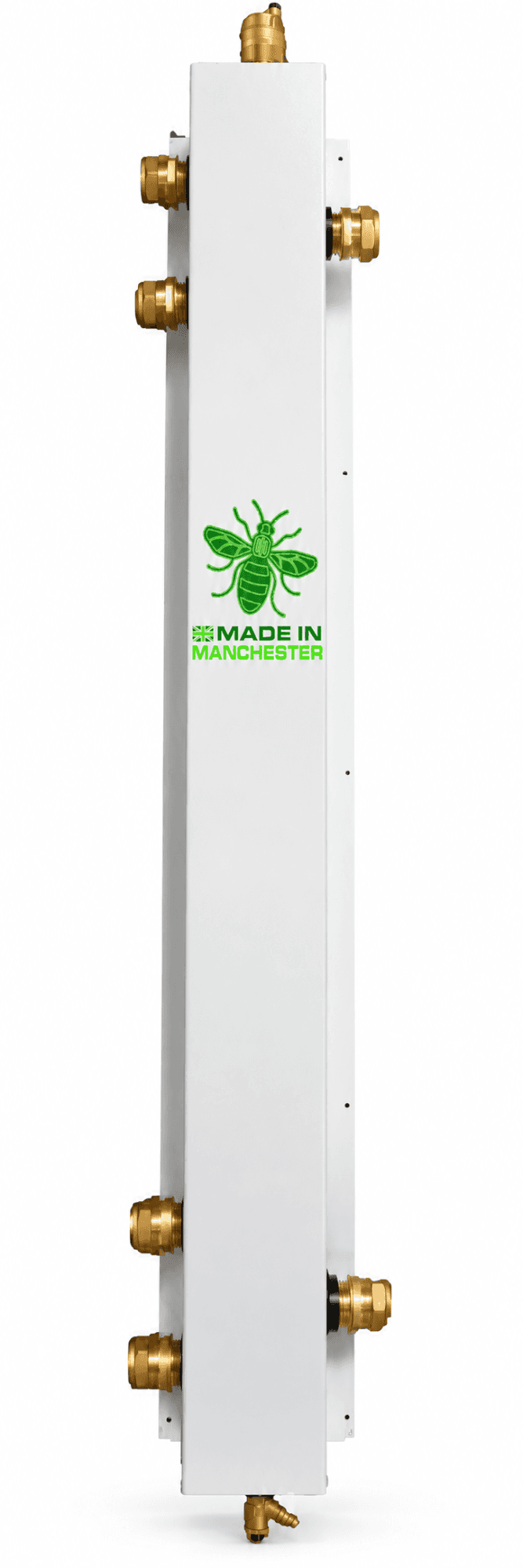
What does a low loss header do?
Keeping flow through the heat source within its design conditions by separating primary and secondary circuits.
Integrating a low loss header into your heating system offers several key advantages, particularly in complex or multi-zone installations:
- Hydraulic Separation: It effectively separates the primary circuit (heat source) from secondary circuits (e.g., radiators, underfloor heating zones). This means pumps in one circuit do not interfere with pumps in another.
- Maintained Flow Rates: Ensures the heat source (boiler or heat pump) always receives its designed minimum flow rate, preventing issues like short cycling, overheating, or reduced efficiency.
- Pump Protection: By providing a point of common pressure, low loss headers can help protect pumps from operating against closed valves or dead-end conditions.
- Improved System Control: Allows for more stable and responsive control of individual heating zones without adversely affecting the heat source operation.
- Air and Dirt Separation (with appropriate fittings): Many low loss headers are designed to facilitate the removal of air and dirt from the system when equipped with automatic air vents and drain cocks, further enhancing system efficiency and longevity.
- Suitability for Low Water Content Systems: Modern boilers and heat pumps often have low water content. A low loss header, sometimes in conjunction with a buffer vessel, helps provide the necessary system volume and stability.